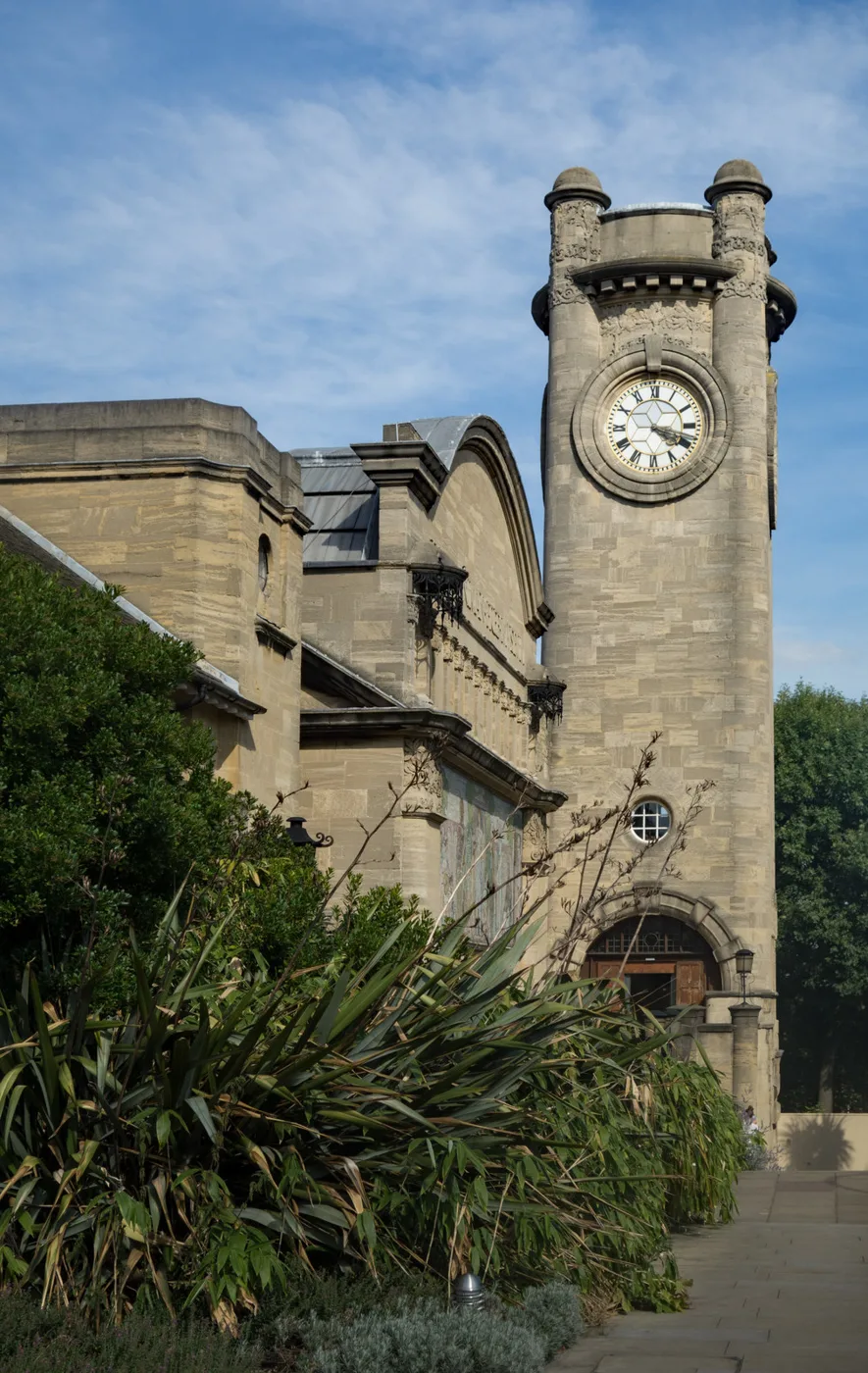

Un-Collectable, a free Horniman display of over 100 works from South West Asian and North African communities, opens 4 December after a free Late on 3 December.
The Horniman Museum and Gardens on London Road opens Un-Collectable / منّا وفينا, a free display of more than 100 contributions from South West Asian and North African (SWANA) communities and their diasporas, on Friday 4 December. The evening before, Thursday 3 December, the museum holds a free Museum Late, A Night of Belonging, to mark the opening.
Overview
- Opens: Friday 4 December, free to visit
- Opening night: Museum Late: A Night of Belonging, Thursday 3 December, free, advance booking recommended
- What is in it: poems, re-written labels, family histories, photographs, illustrations, embroidery and a textile collage, shown with belongings from the Horniman’s collection
- Curated by: Hekayyatna and Heba Abd el Gawad, the Horniman’s Senior Curator of Anthropology
- Where: Horniman Museum and Gardens, 100 London Road, Forest Hill SE23 3PQ
What a museum cannot collect
The display treats museum collections as belongings rather than objects: things that, in the museum’s words, “were part of people’s lives and communities long before they entered a museum”. The Horniman says a museum can collect a photograph, a sketchbook or a piece of embroidery, “but it cannot collect the context, skills, stories, and communities that give them meaning.”
So the community contributions are set beside belongings in the museum’s care. Among them:
- Writing by community members, collected at workshops, summer events and through an online open call. There are poems, re-written labels, complaints, dreams and family histories, and some pieces are written in the voices of belongings taken from where they came from.
- Photographs by Abbas Raad, a photographer based in Iraq, and illustrations by the Kurdish artist Dilshad Hama Amin. The museum says they show how local creatives portray their own communities, set against the stereotypes in sketches and photographs made by Western envoys to the region that sit in the Horniman’s collection.
- New writing by four authors from Gaza, Haneen Hussam, Nourhan Abushahin, Ruba Khalid Al-Faleet and Malak Mamdouh, commissioned with Zines from Gaza / Coastal Lines Press.
Two new commissions
Haya Natsheh’s (Un)Finished Thobe is embroidery worked onto a full-size photographic print of a thobe, a full-length Palestinian dress held by the Horniman. Her stitching completes the Tatreez design that the dress’s original maker, whose name is not known, left unfinished.
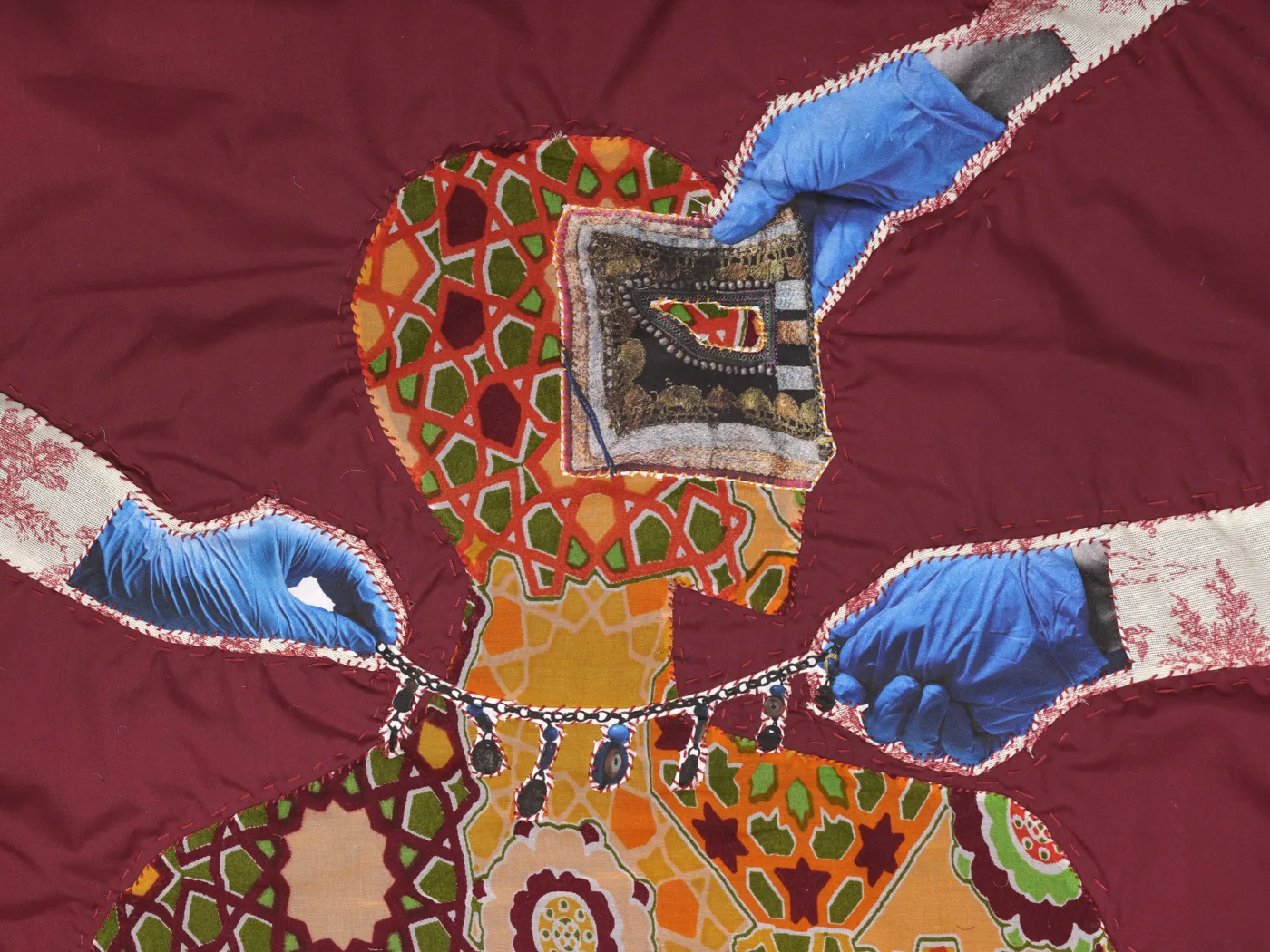
Halima Ibrahim’s textile collage, pictured above, shows a figure holding protective belongings while gloved museum hands reach in from the edges. The question it puts, the museum says, is: “when belongings are taken from their keeper, what do museums claim to protect?”
Around the display, murals by the Palestinian Iraqi artist Yasmine Kadhim turn patterns from the Horniman’s SWANA collection into illustrated “stamps” for visitors to look for. Visitors can also leave what they know on luggage tags and add to a community wall that grows while the display is open.
A new zine, Reclaimed: an anthology by authors from Gaza, published by Coastal Lines Press: Zines from Gaza, will be sold in the Horniman shop.
In the curators’ words
Al Shaibani, co-founder of Hekayyatna, said: “Like many people in our communities, we grew up learning about our own histories through the glass of museum cabinets. When we founded Hekayyatna, one of our aims was to create a platform for the stories of our communities, our elders and our friends, in their own words. Un-Collectable brings those voices into the museum itself, and we hope this inspires more projects and museums to explore community-led curation.”
Heba Abd el Gawad said: “As a curator, I have privileged access to this heritage, yet as an Egyptian I meet my ancestors in acid-free boxes, and my wider SWANA communities through harmful records. I am part of the museum but also part of the communities that museums continue to harm. To me, this exhibition is one way to work in museums without being complicit. The community contributions challenge us to ask whose needs are being served by museums’ care and protection, and what must change for communities to decide how their own heritage is cared for.”
The display is built on an Amanah agreement, Arabic for shared trust, between Hekayyatna and the Horniman. It places responsibility on the museum to carry community knowledge and authorship into its records and its future care of the collection, after the exhibition has closed.
The Arabic and English titles are deliberately different. The Arabic title translates as “From Us, Within Us”, and the English title is rendered in Arabic as ما لا يقتني.
The Late on 3 December
Museum Late: A Night of Belonging on Thursday 3 December celebrates SWANA communities and their stories in museum collections, with live music, food, workshops and, in the museum’s words, “festive vibes”. Hekayyatna curated the evening. It is free, and the museum recommends booking in advance.
Un-Collectable is part of (Re)Claimed: Liberating South-West Asia and North Africa (SWANA) in UK Museums, a community project run by Hekayyatna, the Horniman and UCL and supported through the ESRC Impact Acceleration Account at UCL Innovation & Enterprise.
Other dates at the Horniman and around Dulwich this month are in our what’s on in Dulwich listings.
Source: Horniman Museum and Gardens press office.
Have your say